Categories
Catholic Christianity Saints Spirituality

Vulnerable Uncertainty

sunsetVulnerable Uncertainty

Recently, a friend expressed a dryness in his faith and described feeling a vulnerable uncertainty of the future. I thought, How utterly blessed he is! Why? Because the reality is that all of life is uncertain and we truly are vulnerable, but the world and our own willful determination often convince us otherwise and we ignore the truth. Acknowledging this truth places us on the precipice, positioning us to take that perfect leap of faith, a free-fall into a holy detachment.

Brother Lawrence was a Carmelite monk during the 17th century.  He worked in the kitchen and was said to have transformed drudgery into devotion. “…in the noise and clatter of my kitchen…I possess God in as great a tranquility as if I were on my knees at the Blessed Sacrament.” (The Practice of the Presence of God).  His collected letters reveal that his awareness of God’s presence led to a silent, but continual, conversation with the divine.  It also enabled him to become indifferent to what life might bring and abandon his sense of self as he focused on the love of God.

I am not certain what dry valley brought Brother Lawrence to his precipice, but I do know that at some point, most of us will encounter our own. Whether it be the cessation of a career, or relationship, the death of a loved one, or a parent’s “empty nest”, at some point we become stripped of how we once defined ourselves, our role in life, and what brought us meaning. It is here that we may enter into that dryness of faith, but it is also here where we have our greatest opportunity. This is when we have the opportunity to no longer concern ourselves with a defined role but to simply and wonderfully become a vessel for God’s love; to no longer worry about what life might bring, but to encounter every task and every person placed before us as God sent; to trust that His grace will be sufficient for every challenge we may encounter. It is also our opportunity to wait in peace until God reveals His will.

It isn’t always easy. For several weeks I have been torn about whether or not to apply for a new position at work. I’ve been an instructional coach for 3 years at a middle school, working with Language Arts teachers. I enjoy my work and find it fulfilling. However, another opportunity is on the horizon which excites me with the prospect of new challenges and opportunities for professional growth. I’ve told people that I’m praying about it. But I haven’t exactly been at peace while I’ve waited for God to reveal what He wants me to do. The peaceful wait and discernment requires us to listen, to remain in His presence regardless of where we are, what task is at hand. And although I have prayed about it, I truly haven’t abandoned “my wants” or “needs” in the process. I also haven’t abdicated the “decision” entirely to God. If I had, instead of saying, “I’m torn. I can’t decide,” my response would be, “I’m waiting to see what God wants me to do.” Sheesh! And this isn’t even a valley! Or perhaps it is…

Perhaps it is Christ inviting me to the precipice, encouraging me to free fall into holy detachment, to let go of my will and impression of who I think I am supposed to be, and relish the vulnerable uncertainty as I practice being in the presence of God.

~Sheila LaSalle


Categories
Catholic Christianity RCIA Saints

The Persistence of a Saint

IMG_0342Growing up, celebrating All Saints Day involved much more than dressing up in a costume on the first of November. For weeks leading up to the celebration, each student chose a saint to research and write a report. The culminating activity: dressing up as that saint on All Saints Day.

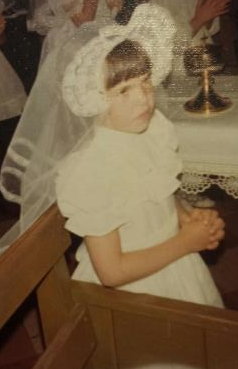
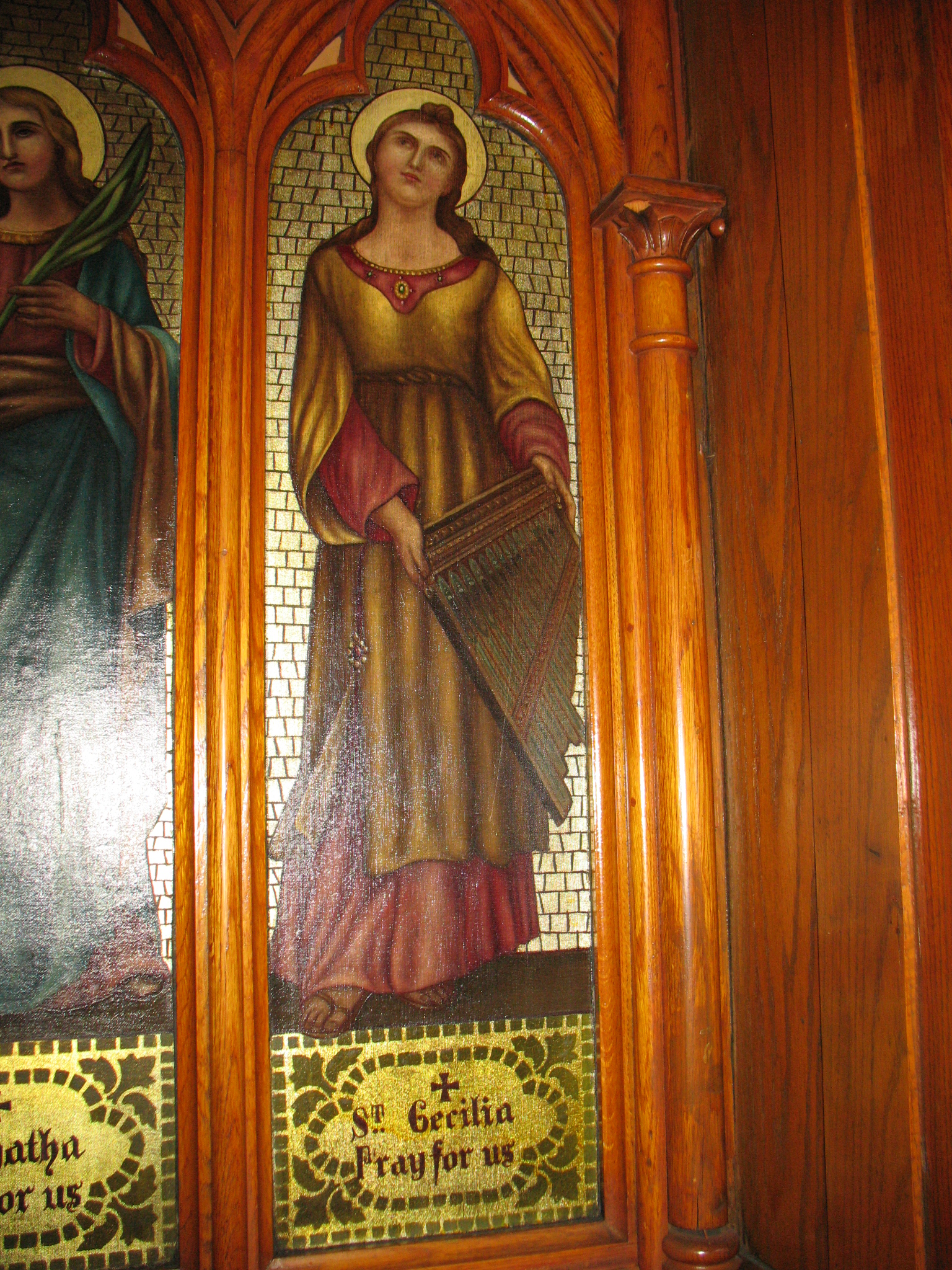
Upon entering the school library, girls with names like Theresa and Monica rushed to the saint section to find the saint that shared their name. Not a strong reader yet, I waited for them to select their books before I searched the bottom stack of picture books for a saint named Sheila. “Looks like I’m off the hook,” I told a friend, “there’s no saint Sheila.” Within minutes, most of my classmates heard my declaration, as well as the librarian, and I was instructed to choose a saint from the collection anyway.  Book after book, every cover captured a smiling saint in the image of perfection. Clean and tidy. They must have been born perfect, I thought and I found it difficult to look at them. I was a tom-boy. I played Little League baseball, and spit. Scuffed knees and dirt under my finger nails was a badge of honor. I looked nothing like these saints, and I was far from having the patience of a saint, a term I heard my mother use to describe my older sister, named after Saint Catherine. Then and there, I determined that I was not born a saint, would never be perfect, and my mother knew it when she named me Sheila.

Not until I was far into my adulthood did I get to know any of the saints. I learned that they really didn’t start out wholesome and perfect. But what made them a saint was that at some point in their life they turned toward God, embraced the Trinity, and lived their life dedicated to Christ. It was this dedication that resulted in a holy communion with God in heaven.   Around this time, I heard a priest define a saint as a friend of God, which is when It all began to make sense. If someone were to be with God after passing from this life, it stood to reason they would be a friend of God during this life also.

It requires a certain dedication to develop and maintain a friendship. Consider the effort we put into our friendships, the hours spent being together, the countless conversations. Over time, as we gain new responsibilities and are pulled in other directions, it requires a certain persistence if we intend for our friendships to last.

As a friend of God, saints also engaged in this behavior. Their faithfulness was more than keeping the commandments and being a “good person”. Their faithfulness was evident in their persistence and dedication to their relationship with Christ.

To be a friend of God and come into union with Him, it is not the patience of a saint we need to adopt, but rather the persistence and dedication of a saint.

Sheila LaSalle

Categories
Catholic Christianity RCIA

Come Holy Spirit fill us with your Love

20130815_174802“…the love of God has been poured out into our hearts through the holy Spirit that has been given to us” (Rom 5:5)

If I only knew…. If I could go back and do it all over again…. I wish I would have held my tongue….

Most of us have experienced regret. “If I spent less money on trivial trinkets and clothes, I would have more disposable income to share with my neighbor who just lost her job.”  “If I only knew the last time I saw my son was really going to be the last time, I would have expressed how proud I was of him and hugged him a little longer.” “If I had been less self-conscious and prideful, I would have asked for help and life today may be quite different.”  Regret may indeed be a part of the human condition, but why?

Because we are not perfect, our actions are not always rooted in a spirit of love. But as Christians, we are called to something greater, we are called to have a loving spirit which requires more than being a nice person. And  I don’t think we can manufacture it on our own.

In Hebrew, the word for spirit is ruah, meaning breath, air, wind. When we pray, asking for the Holy Spirit to fill us, we are essentially asking to be filled with that breath of love so powerful it took on a life of its own. We are asking for the most ancient love of all to reside in us, to take up residence, to live there. So that as we encounter the maze of human trials and relationships, both personal and societal, we do so with a love that surpasses what we alone can summon.

Sheila LaSalle

Categories
Catholic Christianity RCIA

Icons Among Us: Why do Catholics do That?

madonna2Before I returned to the Catholic Church, I began to collect small statues of Mary. My husband, a wood carver and devout Protestant at the time, started the collection with a six inch wooden replica of our Blessed Mother with her hands outstretched. I found it comforting to have her “around”.   But I never prayed near her and with the exception of dusting and rearranging, I never touched her.  I found the act of touching the feet of Jesus or kissing the cross to be an archaic, left-over tradition from centuries past when mankind had not connected the dots between exposure and contagious disease.  So when I first knelt before the statue of Jesus in St. Joseph’s chapel on Mt. Royal in Montreal, I never intended to join the long line of people waiting to do just that. I watched them. When they finally came before him, some clung while some barely grazed his feet with their fingertips, but no one pulled out a handy wipe before or after.

When the line dwindled down to one person, my husband leaned over and asked me if I was going to “go up”. I thought of all the crutches that lined the walls in the entrance to the Oratory, each one bore witness to a miracle. In a burst of humility, I stood up and approached the ceramic Jesus.

Touched by so many before me, his feet hardly resembled feet, but I held them anyway and prayed. The act of treating an inanimate “person” with as much reverence as I would a live being reminded me of the night I held my twenty year old son Luke, six days after his unexpected death.

While my father sat beside him, quietly praying the rosary, I stood as close as I could, without climbing into the coffin, and placed my hand on his chest. He felt doll like, very un-real, and yet, I didn’t want to withdraw my hand. Turning to whisper to anyone else in the room, moving to the left or right so that my husband and other family members could see him, I kept my hand attached to some part of his body. I touched him with no less love than I did when he was a little boy sleeping, because touching the place that once housed his spirit was meaningful.

Four and a half years later, I find that same meaning when I gaze at pictures of him. Pictures serve as a reminder that he was here, that the love and laughter he shared was real, and that I’ll see him again, God willing.

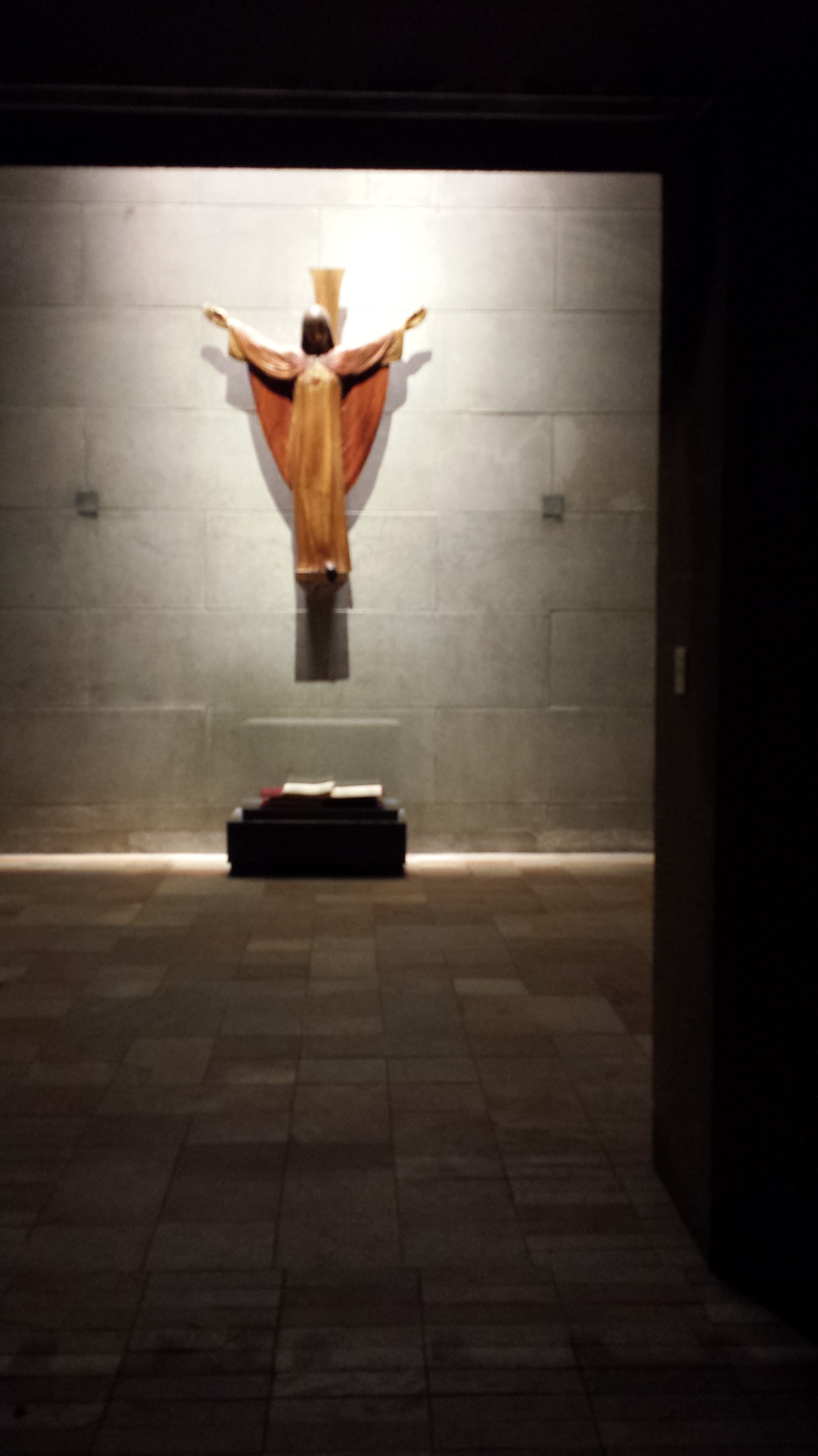
As Catholics, we do not pray to statues. But statues serve as a reminder of the realness of the one it resembles. Just as with every image of our Blessed Mother that I placed in my home also included my plea, lead me to your son, kissing a cross or clinging in deep prayer to the feet of a ceramic Christ is a very real example of the spiritual gesture we are engaging in.

~Sheila LaSalle

Categories
Christianity RCIA

When We Go to Mass

communion (2)We go when we’re content, when we’re guilty and afraid.  We go when we’re grieving and when we’re filled with joy. We go when we need to connect or reconnect with something larger than ourselves, when we need to remember that we’re not alone. But sometimes we go because there is simply no other place else to go. Because we have exhausted every other avenue in our search for completion; shopping, drinking, flirting, working, and we still come up short. We go because on some level we recognize that it is only through this connection that we ever come close to completion. Because when we go, we come into union with a divine essence that settles into the fibers of our heart and transforms us.

Cathy Lynn Brooks

Let me tell you Justine's story

From Word to Word

Reading, writing, philosophy, theology, documentary film, and, of course, fruit preserves

Mother Love, Gratitude and Bliss

Sharing the daily blessings of being a mom

Storyshucker

A blog full of humorous and poignant observations.

Live to Write - Write to Live

We live to write and write to live ... professional writers talk about the craft and business of writing

Mashed Radish

Etymology at the intersection of news, life, and everyday language.

boy with a hat

writing as a way of life

Tales from the Valley

"Not all those who wander are lost"- J.R.R. Tolkien

Jen Fulwiler

Seeking Wholeness in a Broken World

Snapshot Couplets

Marriages of songs, poems, and images

this is... The Neighborhood

the Story within the Story

Come and Follow Me

The Journey Of a Catholic Seminarian